


When to Call an Emergency Locksmith

An emergency locksmith issue is any lock or key problem that immediately threatens safety, security, access to property, or business operations. Timing really matters here. Delays can raise the risk of theft, put people in danger, or cause further damage to your locks and mechanisms. This guide will walk you through when it's best to call an emergency locksmith, how to figure out the urgency for your home, car, or business, and some practical steps you can take while you're waiting for help. You'll get clear rules for deciding what to do about lockouts, broken or lost keys, what to do after a break-in, smart lock failures, and urgent rekeying after a security breach. We'll cover common emergencies, give you step-by-step actions for when you're on the spot, talk about specialist help for safes and smart systems, and show you when a regular, scheduled visit is fine instead of a 24/7 emergency call. We've woven in important terms like 'emergency locksmith,' 'emergency lockout assistance,' '24/7 locksmith for home,' and 'lost key rekey service' into straightforward, practical advice. This way, you can easily decide whether to call us straight away or book a regular appointment.
What Are the Most Common Emergency Locksmith Situations?
An emergency locksmith situation involves an immediate threat to life, property, or access where waiting makes things worse. Urgency usually comes from a safety risk, like someone being trapped or severe weather, a security risk, such as lost keys after a suspected break-in, or the chance of costly, permanent damage, for example, a key snapped in the ignition. Knowing these triggers helps you decide to call a mobile emergency locksmith straight away, rather than waiting for a routine appointment. Below are the most common emergency situations you're likely to come across, and why each one needs a quick, professional response.
Common emergency locksmith situations include:
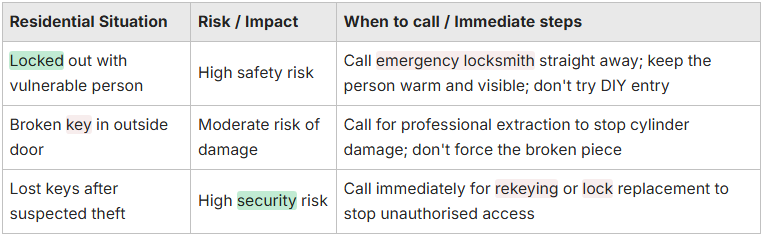
- Residential lockout with vulnerable people: If children, older adults, or bad weather are involved, a lockout can quickly become a safety emergency.
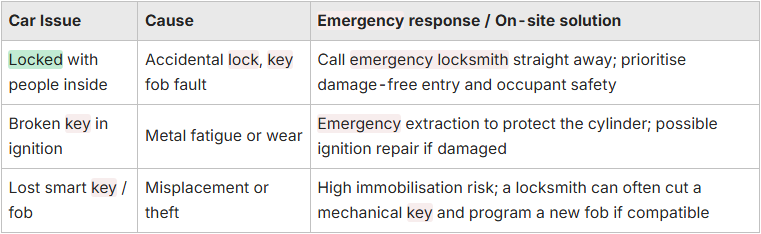
- Car lockout with people inside or in a dangerous spot: If there's an immediate risk to life or a chance of vehicle theft, you need urgent help.
- Broken key stuck in a door or ignition: Trying to force it can cause more damage to the lock or ignition.
- Lost keys after suspected theft or break-in: Getting your locks rekeyed or changed quickly can stop further unauthorised entry.
- Smart lock failure blocking access to important areas: Electronic issues can lock people out of essential spaces.
How Do Lockouts Occur in Residential, Commercial, and Automotive Settings?
Lockouts happen because of human error, general wear and tear, or electronic faults. Each setting has its own common causes that affect how urgent the situation is. At home, it's often misplaced keys, jammed deadbolts, or flat batteries and connectivity issues with smart locks. These become urgent if there are vulnerable people inside or if the weather is bad. In commercial spaces, issues like access-control failures, misplaced master keys, or after-hours lockouts can stop your business from running smoothly or expose sensitive information. Cars often get locked out due to a flat key fob battery, keys left in the boot, or problems with aftermarket immobilisers. These are urgent when people, pets, or road safety are at risk. Understanding these causes helps you prioritise. Lockouts where safety is the main concern need immediate help from a mobile locksmith for damage-free entry.
What Are the Signs of Broken Keys and Lost Keys Requiring Immediate Help?
Broken or missing keys turn into emergencies when they stop you from safely getting out or create a security risk. Signs to look out for include a key that's clearly broken or fragments stuck in a door or ignition, metal shards visible from the cylinder, an ignition that won't turn even though the car recognises the key, or if you've definitely lost your keys and suspect theft. If someone tells you their keys are missing and you're worried about unauthorised access, urgent rekeying or replacing the locks is the safest bet. Here's a quick checklist: confirm if the key is physically damaged, check for any signs of tampering, and think about if anyone vulnerable is involved before calling for key extraction or rekeying.
How Lost Key Locksmith handles emergencies: We always put safety and security first when we get emergency calls. Our 24/7 mobile locksmiths are sent out first to situations where people are in danger, where a recent break-in means there's an immediate risk of theft, or where trying to force entry would cause even more damage. We focus on getting to you quickly, getting you in without damage, and providing on-site solutions that restore access, all while making sure any evidence is preserved if needed. Understanding how we prioritise helps you know what to expect from the emergency locksmith help you'll get.
When Should You Call an Emergency Locksmith for Residential Lock Emergencies?
A residential lock emergency is any situation at your home that puts the safety of those inside or the security of your property at risk, and it just can't wait for normal business hours. The urgency comes from immediate danger, like a child locked out or severe weather, clear signs of criminal activity, such as pry marks or broken locks, or mechanical failures that will only get worse if you try to fix them yourself. Calling an emergency locksmith means you'll get damage-free entry, quick rekeying if your keys are lost, and secure replacement of any compromised hardware. Below are some practical steps to help you decide when to call us straight away and what to get ready for the locksmith's arrival.
Immediate actions to take if you face a residential lock emergency:
- Check safety first: Make sure everyone is safe. If someone is trapped or hurt, contact emergency services straight away.
- Don't force entry: Please don't break windows or try to force locks. This will only increase repair costs and might even destroy important evidence.
- Gather key info: Make a note of the lock type, which door is affected, and any recent security incidents to tell the locksmith.
When you call, a trained locksmith will aim for damage-free entry, can get broken keys out, and will advise you on whether rekeying or a full replacement is needed. Before they arrive, if you have it, gather proof of ownership and clear a safe path to the lock so the mobile locksmith can work quickly and efficiently.
Entity comparison table for common house emergencies:
What To Do If You're Locked Out of Your House?
If you're locked out, first make sure no one is in immediate danger, then look for other safe ways to get in without forcing anything. Check for unlocked back doors or ground-level windows that don’t require climbing, and contact household members who might have a spare key. Avoid using makeshift tools or trying to force the lock. Those steps often make repairs much more expensive. When you call an emergency locksmith, tell them the type of lock, where the door is, and any access issues so they can bring the right tools and aim for the least destructive method.
Following these steps reduces stress and protects the lock while you wait. Giving clear information up front also speeds service and increases the chance of a quick, low-cost resolution.
How to Handle Broken House Keys and Lost House Keys Emergencies?
When a key breaks in a lock or you realise your keys are missing, first secure the door and avoid pushing any broken pieces deeper with household tools. For broken keys, call an emergency locksmith experienced in safe extraction techniques. If keys are lost and you're worried about theft, urgent rekeying or lock replacement is usually the right move to stop anyone with those missing keys from getting in. Rekeying is often quicker and cheaper than a full replacement. A full replacement makes sense when the hardware is damaged or if you're looking for a higher-security upgrade.
The right choice between getting a key extracted, rekeying, or replacing the lock depends on the lock's condition and your security needs. A qualified locksmith will inspect it without causing damage and recommend the least invasive fix to get you safe access again.
When Is It Critical to Contact an Emergency Locksmith for Automotive Lock Issues?
Car lock emergencies become critical when they put people in danger, increase the risk of theft, or threaten the ignition and locking systems if not handled properly. Urgency often comes from someone trapped in a hot car, a broken key stuck in the ignition that could ruin the cylinder, or a lost smart key that leaves your vehicle vulnerable. An emergency locksmith can do on-site key extraction, mobile key cutting and programming, and help you avoid towing or long waits at the dealership. The checklist and table below will help drivers decide what needs immediate action and what can wait for a scheduled service.
If you face an urgent automotive lock issue, do this now:
- Check occupant safety: If someone is inside and at risk, like from heat or a medical issue, call emergency services straight away and ventilate the vehicle if it's safe to do so.
- Look for a spare: If you have a spare key nearby, get it safely before calling a locksmith.
- Don't force the ignition or lock: Don't try to pry or repeatedly turn a broken key. That could mean you'll need an ignition replacement.
These steps protect people and prevent mechanical damage while you arrange emergency assistance or roadside help.
Automotive issues quick-reference table:
How to Respond to Car Lockouts and Lost Car Keys Emergencies?
When you're locked out of your car, put safety and your surroundings first. Move to a safe spot off the road, keep anyone inside visible, and if you have it, use roadside assistance along with calling a locksmith. Give the locksmith your vehicle's make, model, year, and key type so they bring the right cutting and programming tools. This really speeds up mobile key replacement. Dealerships can program keys, but they might need your car towed and it could take extra time. Mobile emergency locksmiths often provide faster on-site cutting and fob programming. Keep your vehicle registration or proof of ownership handy to confirm you're authorised for key services.
These steps smooth the emergency response, help the locksmith work non-destructively, reduce downtime, and often avoid unnecessary towing.
What Are the Solutions for Broken Car Keys in Ignition or Locks?
A broken key stuck in an ignition or door needs careful extraction to avoid scratching the cylinder or damaging the immobiliser electronics. A skilled emergency locksmith uses specialised pullers and extraction tools to remove fragments safely. After getting the key out, the locksmith will inspect the cylinder and ignition to decide if a repair or replacement is needed. Some ignition cylinders can be repaired on-site, while others might need dealership work or a full replacement. Temporary fixes, like making a working mechanical key from the broken piece, can often get you back on the road quickly. If the ignition damage is severe, you might need to tow your car to a workshop or dealership for a full replacement and immobiliser programming.
Knowing these options helps you decide whether to request immediate extraction or plan for more extensive repair if replacement seems likely.
What Are the Key Commercial Lock Emergencies That Require Immediate Locksmith Services?
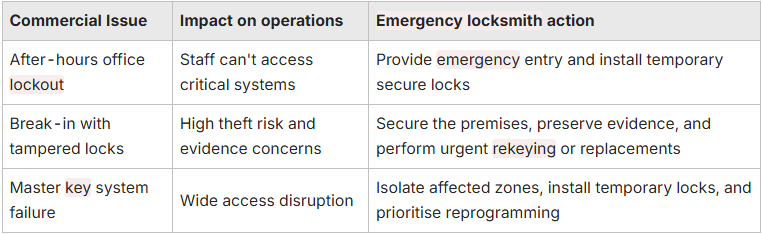
Commercial lock emergencies put your business operations, staff and customer safety, and assets at risk, so a quick response is absolutely important. Urgency often comes from access-control failures, a compromised master key, or security gaps after a break-in that could allow repeat theft or unauthorised access. Emergency locksmith services for businesses focus on quick rekeying, temporary access control measures, and damage-free entry that helps preserve evidence for law enforcement. Below is a prioritised checklist and a short note on master key versus single lock failures.
Immediate commercial lock priorities include:
- Secure premises after a break-in: Prevent further theft and preserve the scene for investigators.
- Restore staff access: Reduce downtime by installing temporary access while permanent solutions are arranged.
- Address master key or system failures: Reprogram or isolate compromised credentials quickly to keep your operations running.
Rapid action reduces financial loss and reputational damage and helps the business reopen safely.
Commercial emergency scenarios table:
How to Manage Office Lockouts and Business Security After Intrusions?
Start with a security-first assessment. Isolate any affected areas, prevent further entry, and notify law enforcement if you suspect a break-in. Preserve any signs of forced entry for investigators and avoid changing locks until authorities have documented the scene, if required. An emergency locksmith can secure the premises with temporary measures that help maintain evidence. Work with the locksmith to rekey or replace any compromised locks, restore authorised access, and assess whether your access-control systems need reprogramming or hardware replacement. These steps help reduce downtime while balancing the needs of investigators and keeping your business running.
Coordinating effectively between managers, law enforcement, and a qualified emergency locksmith minimises long-term disruption and speeds a secure return to normal operations.
When Should You Request Commercial Lock Repair or Master Key System Emergencies?
Call for emergency commercial locksmith service when a master key is missing, when an access-control failure locks out multiple authorised users, or when tampered locks threaten your ongoing operations or safety. Temporary isolation measures, such as deactivating compromised credentials and installing physical temporary locks, will keep your business functioning while permanent solutions are arranged. Prioritise urgent repair or reprogramming when failures affect emergency exits or critical infrastructure. Non-critical issues can wait for scheduled maintenance. An emergency locksmith will assess the situation and recommend immediate containment actions, followed by a plan for long-term fixes.
These rules help businesses escalate appropriately, protect safety, and reduce costly downtime by focusing emergency resources where they matter most.
Which Specialised Lock Emergencies Demand Urgent Locksmith Attention?
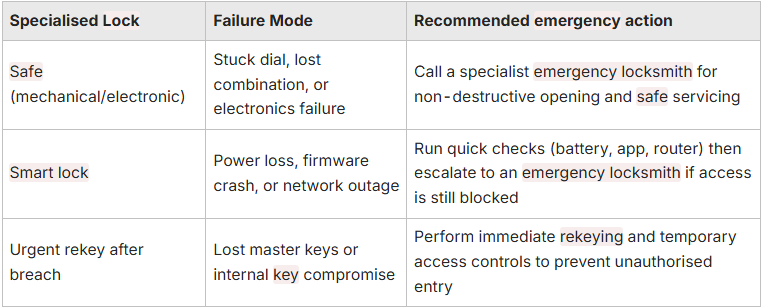
Specialised lock emergencies, like safe lockouts, complex smart lock failures, and urgent rekeying after security breaches, need tools and expertise that go beyond routine lockwork. Urgency comes from the potential loss of high-value contents in safes, simultaneous electronic and network failures that block access to smart locks, or compromised keys that threaten entire premises, requiring urgent rekeying. Calling an emergency locksmith with specialist training ensures non-destructive safe opening where possible, secure handling of electronic locks, and fast rekeying to get rid of compromised credentials. The table below outlines common specialised failures and recommended emergency actions.
Specialised lock emergency decision table:
How to Handle Safe Lockouts and Smart Lock Malfunctions in Emergencies?
Safe lockouts need specialist skills because trying to fix them incorrectly can permanently damage the mechanism or what's inside. An emergency locksmith trained in safe opening will use diagnostics and non-destructive methods whenever possible. With smart locks, start with some simple troubleshooting. Check the batteries, confirm your app connectivity, and reboot any hubs or routers. If those steps don't work, or if the lock controls really important access points, call an emergency locksmith who knows their way around electronic locks. Avoid trying to take apart safes or smart locks yourself. That can void warranties and significantly increase repair costs. A professional will maintain functionality and security while getting you back in quickly.
Knowing the difference between mechanical and electronic safe failures ensures you call the right specialist and avoid costly mistakes.
When Is Urgent Lock Rekeying Necessary After Security Breaches?
Urgent rekeying is the right call when keys are lost with evidence of unauthorised access, when a master key is missing, or when an employee who has left still has access to sensitive areas. The risk is that someone could get in again without permission. Rekeying changes the internal pins so old keys no longer work. It's often quicker than a full replacement and restores security fast. Emergency rekeying can be done on-site by a mobile locksmith, usually within hours depending on how many cylinders are involved. Temporary security measures can protect the site while a long-term plan is put in place. A professional will assess whether rekeying or immediate replacement is the better long-term choice, based on the hardware condition and your security needs.
Timely rekeying after a breach reduces exposure and gives you breathing room to plan comprehensive upgrades if required.
When Should You Not Call an Emergency Locksmith?
Not every lock issue needs emergency attention. Many situations are better handled by a scheduled service. This helps you avoid unnecessary emergency fees and ensures locksmiths can bring the right parts. Non-urgent cases include routine upgrades, minor jams when the weather is mild, requests for duplicate keys, and cosmetic hardware problems that don't affect how the lock works. Knowing which issues can wait means emergency resources are available for genuine threats, and it ensures you get the right service at the right price. Use the checklist below to figure out the urgency yourself and decide when to schedule a regular locksmith visit.
Non-urgent lock and key situations checklist:
- Routine key duplication or lock upgrades: Book these during business hours with a standard appointment.
- Minor sticking lock in good weather: Try lubricating it and schedule maintenance if the problem continues.
- Cosmetic hardware issues: Don't call an emergency locksmith for scratches or loose trim unless it affects how the lock works.
What Are Non-Urgent Lock and Key Situations?
Non-urgent situations don't pose immediate danger or a security risk and can be handled with planned appointments. These include things like key duplication, lock lubrication, or scheduled upgrades. The rule is simple: if no one is at risk, there are no signs of tampering, and access to critical systems isn't blocked, then the problem can definitely wait for a regular locksmith visit. For these jobs, gather the lock brand and type, plus your preferred appointment times, so the locksmith can bring the right parts. Scheduling non-urgent work reduces emergency costs and allows for thoughtful upgrades that improve your long-term security.
Preparing this information in advance helps the locksmith finish the job in one visit without needing expedited parts orders.
How to Identify Situations That Can Wait for Regular Locksmith Services?
To decide if an issue can wait, do a quick self-check. Confirm there's no safety or security threat, see if simple troubleshooting, like a battery change or lubrication, fixes it, and consider if putting off the work increases any risk. If the issue passes these checks, book a regular locksmith appointment during business hours and make a note of any specific hardware or access limitations. If things start to get worse, like shredded key fragments, visible tampering, or vulnerable people involved, then upgrade to an emergency call straight away. This approach balances using resources efficiently with paying close attention to safety and security.
These decision rules help homeowners and businesses choose between emergency locksmith services and routine maintenance.
Lost Key Locksmith focuses its emergency response on getting to you fast, 24/7 availability, damage-free entry techniques, and experienced mobile locksmiths for home, business, and vehicle lock emergencies. If you're after an emergency locksmith that prioritises non-destructive solutions and a safety-first approach, look for a provider offering rapid dispatch, secure rekeying after suspected breaches, and on-site expertise with smart locks and safes. If your situation needs urgent attention, have the key details ready: the lock type, exact location, who's inside, and any signs of tampering, so the locksmith can respond efficiently. Clear information helps emergency locksmiths restore access and security with minimal delay.
Read More

Lost Your Car Keys? Advanced Locksmith Solutions for Modern Vehicles
Gone are the days when a simple key blank could solve a car lockout. Modern vehicles, particularly those manufactured after 1995, are equipped with sophisticated immobiliser systems.
Affordable Locksmith Services in Sydney
When you need a locksmith in Sydney, especially during an emergency, the last thing you want is to get ripped off. But the locksmith industry has a reputation problem for good reason. Too many people have horror stories about calling a number promising cheap rates only to face massive surprise charges once the locksmith arrives, or worse, dealing with unlicensed operators who damage locks and disappear without properly securing the property.
What Does a Locksmith Do?
A locksmith helps keep people and property secure by installing repairing and managing mechanical and electronic locks. This guide explains what locksmiths do for homes businesses and vehicles including lockouts rekeying car keys access control and smart locks.


