


Emergency locksmith lock replacement
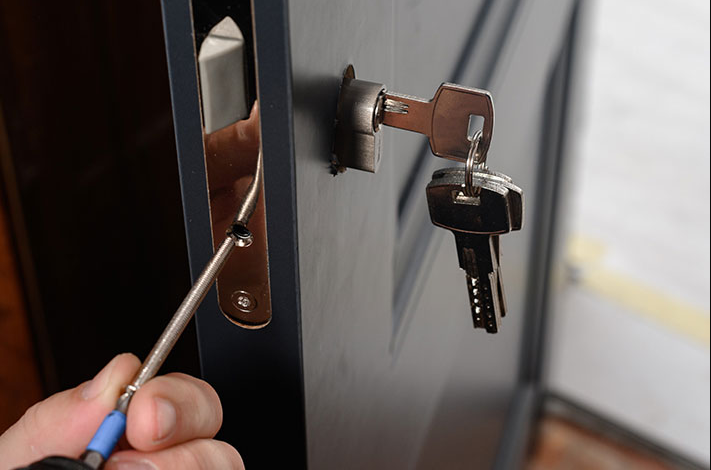
Emergency lock replacement is the immediate removal and fitting of a new lock to restore access and secure a home or business after keys are lost, a lock is damaged, or there’s been a security breach. The process removes compromised parts, for example a cylinder or deadbolt, and installs a mechanically sound or updated electronic lock so the property isn’t left vulnerable. Knowing how emergency locksmith lock replacement works helps homeowners, tenants and business owners act fast after lost keys, break-ins or failed hardware and quickly regain control over who can get in. This guide covers when an urgent lock change is needed, the common lock types used in emergency responses, a step-by-step replacement workflow, Sydney-specific cost guidance and how to pick a reputable emergency locksmith. You’ll also find prevention tips, smart-lock security notes and quick comparison tables to help you make a decision when you're under the pump. Keywords like emergency locksmith lock replacement, emergency lock change and emergency deadbolt replacement are used naturally to keep this useful and easy to find.
When do you need emergency lock replacement?
You need emergency lock replacement when a lock no longer secures your property or when missing keys might be misused. Replacing the compromised component, whether it's a cylinder, bolt or the whole lock, restores security quickly and closes the period someone could exploit the weakness. Check the situation to judge urgency: visible forced entry, confirmed lost or stolen keys, or catastrophic mechanical failure usually call for immediate replacement rather than a delayed repair. Acting quickly also helps meet insurance or tenancy requirements that expect fast action.
Common emergency situations that need lock replacement
Typical emergencies include lost or stolen keys, forced entry after a break-in, and locks that are so badly damaged or jammed they can’t be safely repaired. If keys are missing and you suspect others might have access, changing the cylinder or the whole lock restores key control and peace of mind.
When a break-in shows visible forced entry, the lock’s structure, and possibly the door frame or strike plate, may be compromised. A full replacement is often the safest option.
Mechanical failures such as a sheared bolt or a collapsed internal mechanism also require replacement to make locking reliable again and reduce the risk of a repeat lockout.
- Lost or stolen keys that could be used by others should trigger an immediate replacement to restore key control.
- Visible forced entry from a break-in usually means a full lock change is the safer choice.
- Severely damaged or jammed locks that can’t be trusted should be replaced to secure access.
These triggers help you choose between immediate replacement and temporary measures like rekeying. Understanding the cause of failure guides whether a partial repair or a full emergency lock change is needed, and that decision points to the right lock type for the job.
Example: in urgent situations, like a late-night break-in or lost keys, reputable Sydney emergency locksmiths such as Lost Key Locksmiths offer 24/7 rapid response with mobile on-site service and even a $0 call-out policy. That’s the kind of capability to look for when speed matters.
Does moving into a new property change your lock needs?
Moving into a new place creates uncertainty about who has keys. Rekeying (changing the internal pins so old keys no longer work) is a quick, lower-cost option when the hardware is in good condition. Full replacement is a better choice when locks are old, the door lacks reinforcement, or you want an upgrade to a higher-security deadbolt or a smart lock. Acting immediately after a move prevents unknown prior access and establishes a clear key control baseline.
- Rekeying restores exclusive access quickly when the lock hardware is sound.
- Full replacement is recommended for older locks, damaged doors, or when upgrading security.
- Immediate action on moving in reduces the risk from unknown prior key holders.
Choosing between rekeying and replacement balances cost, speed and the security outcome you want; that choice also helps you figure out which lock types are best for emergency replacement situations.
What types of locks are used in emergency replacement services?
Emergency locksmiths typically carry a set of reliable locks chosen for quick fitting and improved security. The common options are deadbolts, standard cylinder locks, high-security cylinders and smart locks. Each of these offers different levels of protection, installation time and cost. The right choice depends on door compatibility, how many people use the door and whether you need immediate mechanical strength or electronic access control. Picking the appropriate lock restores security fast and aligns with longer-term maintenance and cyber considerations.
Different lock types suit different emergencies. The table below summarises security level, typical cost range and best use case to help you decide quickly.
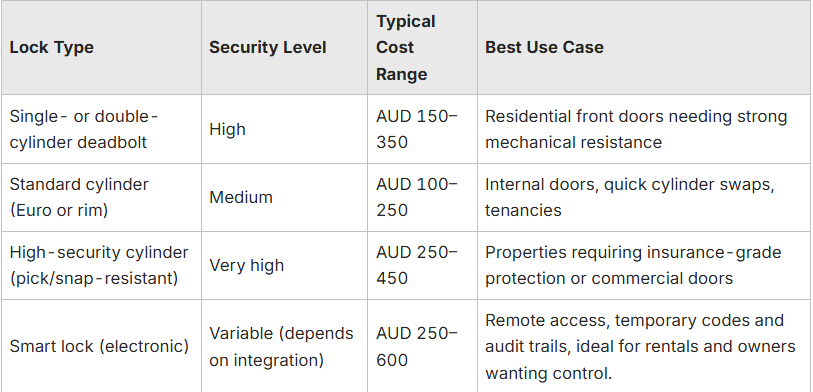
This quick comparison helps non-experts pick a lock type for an urgent replacement. Deadbolts and high-security cylinders focus on mechanical resistance while smart locks add access control and logs, though their cybersecurity posture needs attention. Knowing these trade-offs makes it easier to choose under pressure.
How do deadbolts, smart locks and high-security cylinders compare?
Deadbolts give strong mechanical resistance with a solid bolt and reinforced strike plate, making them a reliable first choice for front doors in an emergency. Smart locks offer convenience: remote locking, temporary codes and activity logs, but they introduce cybersecurity tasks like firmware updates and secure network setup. High-security cylinders are built to resist picking, drilling and snapping and are often required for commercial sites or by insurers. Each option balances physical resistance, installation time and ongoing maintenance. You'll need to weigh those factors against your property’s use, how urgent the situation is, and your tolerance for digital risk.
In short: deadbolts for mechanical strength, smart locks for control and convenience, high-security cylinders for specialised resistance. With that settled, the next section explains the standard emergency replacement workflow locksmiths follow.
Which lock types suit residential vs commercial emergency replacements?
Residential emergencies usually prioritise fast-to-install deadbolts or quick cylinder swaps that meet home insurance expectations. Commercial sites commonly need mortice locks, commercial-grade deadbolts or integrated access control to handle heavy traffic and compliance needs. Consider door construction, traffic level and insurance or building code requirements: busy commercial doors benefit from hardened mortice systems, while residential doors often get the best value from a quality deadbolt plus reinforced hardware. Balance how fast the job needs to be done with long-term durability when deciding between a quick swap or a full upgrade.
- Residential: single/double-cylinder deadbolts or smart locks for convenience and auditability.
- Commercial: mortice locks, commercial deadbolts and high-security cylinders for frequent use.
- Considerations: traffic volume, insurance requirements and acceptable downtime.
Choosing the right lock type leads into how an emergency locksmith carries out the replacement.
How does the emergency lock replacement process work?
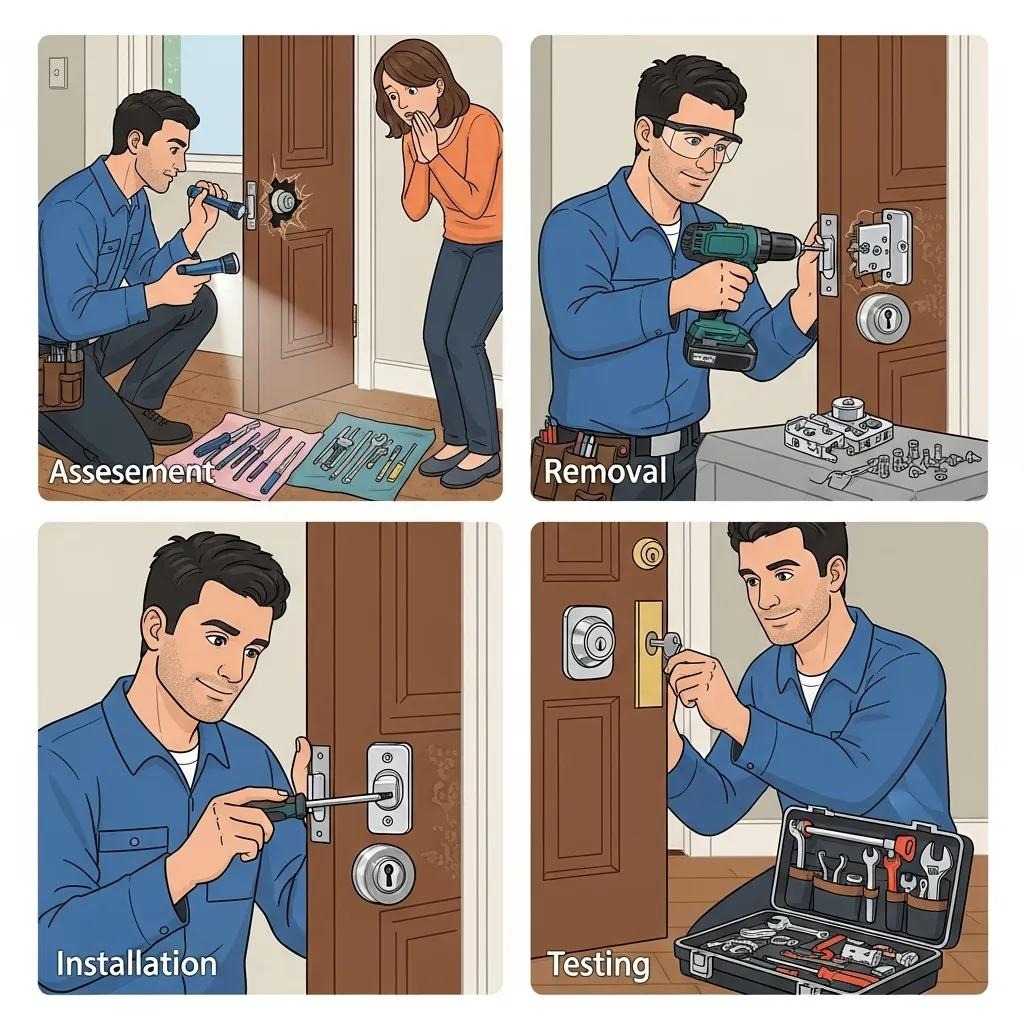
Emergency lock replacement follows a clear workflow: you call or book, the locksmith assesses the situation on-site, the compromised hardware is removed, the chosen lock is installed and the new system is tested and verified. This removes the weak components and ensures the new lock fits the door and frame correctly, restoring both access and resistance to attack. The main benefits are reduced exposure time, restored peace of mind and a documented handover you can use for insurance or tenancy records. Expect transparent pricing for parts and labour and a quick demonstration of the new lock’s operation.
Step-by-step actions in an emergency lock change
Below is the usual ordered procedure locksmiths follow. This is helpful for HowTo schema and quick reference.
- Call-out and assessment: The locksmith checks the damage, inspects the door/frame and agrees the desired outcome.
- Removal of the old lock: The locksmith removes the compromised cylinder or bolt and clears any debris or damaged strike plates.
- Installation of the new lock: The new cylinder, deadbolt or smart module is fitted, aligned and secured to manufacturer and safety standards.
- Testing and verification: The locksmith demonstrates operation, cycles the lock several times and provides documentation or a receipt.
This sequence sets expectations and keeps surprises to a minimum during an emergency visit. Next we cover what to expect from a 24/7 emergency locksmith service during that process.
What should you expect from a 24/7 emergency locksmith service?
A professional 24/7 emergency locksmith should offer reasonable response times, mobile vans stocked with common parts, clear pricing for labour and parts, and a short workmanship warranty. Urban response times are typically 20–60 minutes depending on traffic and distance; a mobile-equipped locksmith is more likely to resolve the problem on the first visit. Typical inclusions are labour, basic replacement hardware and disposal of replaced components. Watch for red flags like vague quotes, refusal to show ID, or demands for full cash payment without a receipt. Clear communication at booking, about likely costs, the estimated time of arrival (ETA) and what will be replaced, helps avoid hidden fees.
Example: a reputable Sydney provider like Lost Key Locksmiths, running 24/7 mobile teams, may advertise a $0 call-out fee. This is a useful feature when speed is important, but always confirm the terms before you book.
How much does emergency lock replacement cost in Sydney?
Costs vary with lock type, time of day, installation complexity and travel or parts needs. The ranges below give a practical planning guide for Sydney.
Price drivers include the lock chosen, labour time and whether you need after-hours or same-night service.
The table breaks down common cost components and typical ranges so you can compare quotes and spot unreasonable charges.
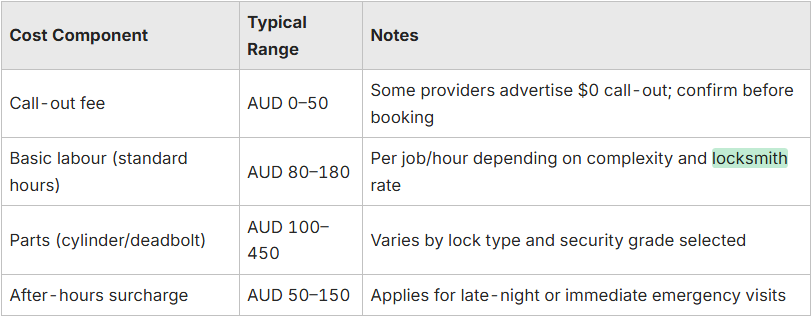
Use this breakdown to ask the right questions about what’s included. Below are the main factors that can change the final price and how to plan for them.
What factors influence the cost of emergency lock replacement?
Key cost drivers are lock type (mechanical versus electronic), time of day (after-hours surcharges), any required door/frame repairs and parts availability. High-security cylinders and smart locks have higher parts costs and may take longer to install, increasing labour charges. Emergency visits outside normal hours usually carry a premium. Travel distance and the need to source uncommon parts can also raise the invoice. Giving accurate details on the initial call helps reduce surprises.
- Lock type and parts required can significantly change the quote.
- After-hours requests commonly incur emergency premiums.
- Door or frame repairs increase labour and materials costs.
Knowing these factors helps you anticipate reasonable costs and compare provider quotes effectively.
Are there extra fees like call-out charges or after-hours rates?
Discuss fees clearly when you book to avoid unexpected charges. Common extras include call-out fees, after-hours premiums, disposal fees for damaged hardware and special-part surcharges for non-standard cylinders. Ask the locksmith to itemise call-out, labour and parts in their quote and confirm whether any advertised $0 call-out applies to your situation. Good questions: is the quote fixed or estimated, what warranty covers the work, and does the price include testing and a receipt?
- Call-out fees can be $0 with some providers, so always confirm the terms.
- After-hours rates commonly add 25–100% depending on timing and urgency.
- Request an itemised quote and a written receipt to avoid hidden fees.
Being explicit about fees at booking reduces disputes and sets clear expectations before the locksmith arrives.
How to choose the right emergency locksmith in Sydney?
Pick a trustworthy emergency locksmith by checking credentials, response capability and transparent pricing and warranty terms. Vetting reduces risk by confirming the provider has insurance, licences where required and a good local reputation. Look for mobile on-site capability, clear ETAs and itemised quotes. These are all signs of locksmiths who can handle emergency lock replacement efficiently and professionally.
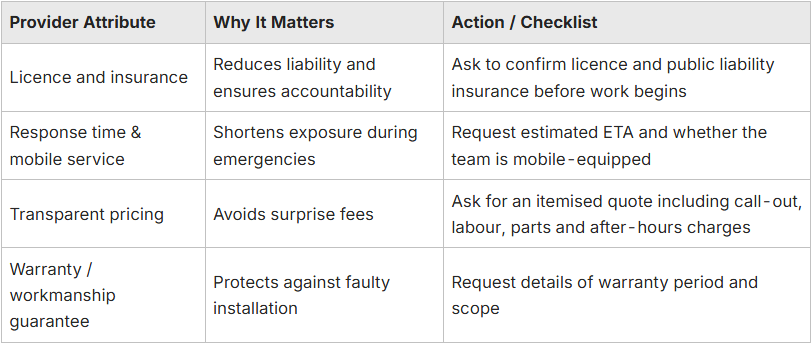
This checklist helps you vet providers quickly during an emergency call. The sections that follow explain the specific credentials and reputation checks to run before you commit.
What licensing, insurance and reputation should you look for?
Confirm the provider’s licence where applicable, current public liability insurance and any workmanship guarantees. Verifying these on the phone helps you avoid uninsured locksmiths and gives you recourse if work is substandard. Check recent local reviews and, if needed, ask for references or examples of similar emergency jobs. A responsible locksmith will explain insurance coverage, warranty terms and provide a clear, itemised receipt when the job is done.
- Confirm licence and insurance before authorising work.
- Ask about recent similar jobs as evidence of local reputation.
- Insist on a written receipt and warranty documentation when the job is complete.
How important is fast response and mobile service for emergencies?
Fast response reduces exposure after a loss or break-in and lowers the chance of opportunistic re-entry or further damage. Mobile locksmiths carry common parts and tools so they can often complete a replacement on the first visit. Reasonable urban response times in Sydney are typically 20–60 minutes depending on traffic and distance. When speed matters, prioritise providers that confirm an ETA, operate mobile vans and disclose whether they stock the lock types you need.
- Typical reasonable response times: 20–60 minutes in an urban setting.
- Mobile-equipped locksmiths increase first-visit success rates.
- Balance speed with transparent pricing. The fastest option isn’t always best if credentials or costs are unclear.
Choosing a quick, well-equipped locksmith reduces repeat call-outs and leads naturally to preventative measures that cut the chance of future emergencies.
What preventative measures and security upgrades reduce future emergencies?
Preventative steps, like installing high-security deadbolts, using smart-lock audit controls, scheduling regular maintenance and managing spare keys securely, all help reduce how often locks fail or are compromised. Mechanical upgrades improve resistance to forced entry while electronic controls add audit trails and temporary codes so you don’t need to hand out physical keys. Regular inspections catch wear before failure and good spare-key policies prevent accidental loss. Together, these measures lower emergency call-outs and improve long-term security.
How can smart locks and high-security deadbolts improve safety?
Smart locks let you use time-limited codes, remote locking and usage logs, which reduce reliance on duplicate keys and suit rentals or managed properties. High-security deadbolts and cylinders raise mechanical resistance to picking and forced entry, lowering the chance of break-ins that lead to emergency replacements. Smart locks need cyber-hygiene, things like firmware updates, strong passwords and network separation. Pairing electronic access with solid mechanical hardware creates a layered defence. Together they offer flexible access control plus improved physical protection.
- Smart locks: time codes, remote control and audit logs; require regular firmware and security checks.
- High-security deadbolts: stronger mechanical resistance, often insurer-preferred and durable.
- Combined approach: best for owners who want both convenience and solid physical protection.
These upgrades reduce both the likelihood and impact of future emergency lock replacements.
Practical tips to avoid emergency lock replacement situations
Simple habits and routine maintenance make a big difference: keep spare keys secure (trusted safes or controlled duplicates), schedule periodic lock inspections, avoid leaving keys in obvious places and replace worn hardware before it fails. Regular lubrication, tightening strike plates and checking cylinders can prevent sudden breakdowns. For high-turnover properties like rentals, use smart locks with temporary codes or rekey between tenants to maintain access control without constant physical replacements.
When you need urgent help in Sydney, look for 24/7 providers with mobile on-site teams and clear fee policies (for example, advertised $0 call-out terms). Lost Key Locksmiths, offers such services, handling emergency lock replacement, deadbolt installation and urgent repairs to restore security quickly and reduce the chance of repeat call-outs.
Read More

10 Best Door Locks Manufacturers in Australia
Choosing the right door lock manufacturer can make the difference between decades of reliable security and constant frustration with failing hardware. With so many brands claiming to be "the best," how do you separate genuine quality from clever marketing?

What to know about hand lever locks
Hand lever locks use horizontal handles you push down to open, making them much easier than door knobs for people with arthritis or when carrying items. They meet accessibility codes.
Fast and Reliable Lost Key Locksmith Services for Quick Car Key Replacement in Sydney
Losing your car keys or being locked out of your car is stressful but it does not have to ruin your day. Our lost key locksmith services provide fast mobile car key replacement across Sydney, covering mechanical keys, transponder keys, remote fobs, and many smart key systems right where you are.


