


Lock replacement cost comparison what Sydney homeowners and businesses should expect
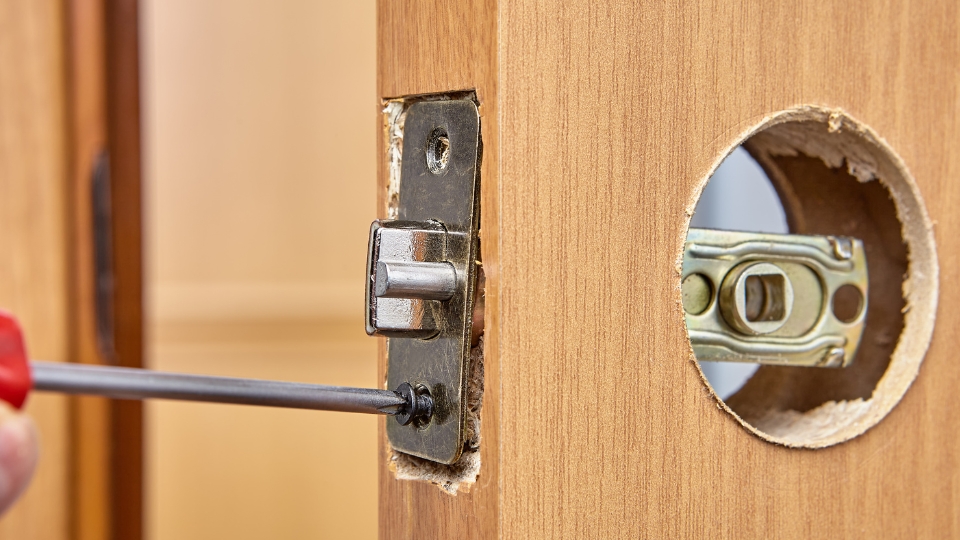
Lock replacement is the process of removing an existing locking mechanism and fitting a new cylinder, deadbolt, mortise unit or electronic entry device to restore or improve security. This guide breaks down how lock replacement costs compare across Sydney residential and commercial jobs: typical price bands, the main factors that shape final quotes, and when rekeying is a cheaper, smarter alternative. If you need to budget for door hardware, labour and extras like multi-point conversions or smart lock integration, this article gives practical, region-specific guidance. We walk through average costs by lock type, common labour and emergency fees, rekey versus replace decision points, DIY risks, how to get an accurate written estimate in Sydney, and the benefits and costs of smart lock upgrades. Use the cost tables and checklists to compare options quickly, then follow the step-by-step advice on getting itemised quotes and avoiding hidden fees.
Average cost to replace common door locks in Sydney
Lock replacement quotes in Sydney usually separate parts and labour: parts cover the cylinder, deadbolt or smart unit; labour covers fitting, door prep and testing. In 2025, a straightforward lock swap often lands near the national mid-point, around $150, with typical local ranges from about $80 to $350 depending on quality and complexity. Labour factors such as call-out minimums and hourly rates are a large part of the final price because locksmiths include travel, on-site diagnostics and any door adjustments in their time estimate. The final cost depends on whether the job is a quick cylinder change, an upgrade to a high-security deadbolt, or a smart lock installation that needs programming and network setup.
Below is a quick reference table comparing common door lock types, typical replacement cost ranges in Australian dollars (AUD), and typical labour notes so you can see where most of your budget goes. It’s designed to be scannable for fast comparison when you’re evaluating quotes.
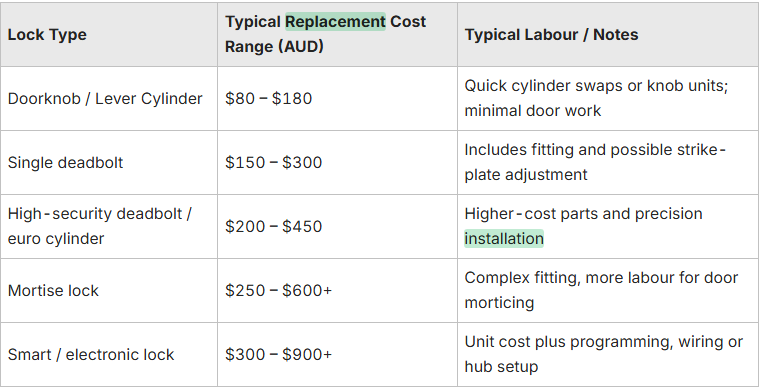
The table shows how parts and labour combine to set the total price and why high-security or electronic options push costs up. For a customised estimate, match the lock type, door material and access needs to expected labour before accepting a quote. After these ranges, a local example helps align pricing with Sydney service availability.
We at Lost Key Locksmiths are a Sydney-based team, offering lock replacement for homes and businesses. We provide itemised quotes that reflect the ranges above and explain which line items drive the final price. We can confirm whether a quote includes call-out fees, parts warranty and emergency surcharges so you can compare offers fairly. Knowing these local pricing norms makes it easier for you to spot unrealistically low bids and choose the right supplier for your needs, and we're always transparent with ours.
Replacing basic doorknobs and levers what it costs
Replacing a basic doorknob or lever usually means swapping out the existing cylinder or set for a new unit that fits the door thickness and backset. Parts for standard residential knob or lever sets sit in the lower price bands, and a direct swap normally takes under an hour, so total costs commonly range from $80 to $180 depending on brand and finish. These locks offer standard convenience-level security suitable for internal doors or lower-risk exterior entrances; upgrading to a higher-security cylinder adds material cost and improves resistance to picking and forced entry. If the door needs mortising, strike realignment, or the latch is worn, expect extra labour and a higher final quote, so confirm the job scope with your locksmith before authorising work to avoid surprises.
Deadbolt and mortise lock replacement costs
Deadbolts and mortise locks require greater precision and often higher-cost components, so their replacement ranges exceed basic knob work. A standard single deadbolt replacement typically falls between $150 and $300 including installation, while high-security deadbolts or euro cylinders can push totals to $200 to $450 or more. Mortise locks, common on older or commercial doors, are the most labour-intensive because they need accurate cavity work in the door edge; mortise replacements commonly start around $250 and can exceed $600 for complex fittings or custom hardware. Because lock complexity directly drives parts price and skilled labour time, tell your locksmith the desired security rating and any keying needs to get a reliable estimate.
Smart and electronic lock installation expected costs
Smart and electronic lock installs combine device cost, integration work and configuration time, so quotes often list several line items. Quality smart locks range from low-hundreds for mid-level options to premium systems above $700; installation, pairing with Wi-Fi bridges or home automation hubs, and programming add further labour and parts costs. A realistic Sydney total frequently sits between $300 and $900 or more. Extra expenses appear if the door needs modification for the smart module, if wiring is required, or if an external gateway is needed for remote access. Smart systems also carry ongoing maintenance (battery changes, firmware updates), so factor lifecycle costs into your budget when comparing one-off labour versus long-term value.
What influences lock replacement costs across Sydney?
Final pricing in Sydney reflects several interacting variables: the lock type and security level, brand and finish of parts, locksmith labour rates and minimum fees, time of day for service, and any door or frame work required. Labour rates and call-out minimums set the baseline regardless of parts cost; emergency and after-hours calls attract surcharges that can materially increase the invoice. Mismatches between a lock and the door, for example needing to re-bore or reinforce the frame, add material and time costs, while inner-city jobs sometimes carry small premiums because of traffic and parking. Understanding these factors helps you forecast a realistic budget when comparing local quotes.
Here are the main pricing components you’ll usually see itemised on a quote and what each covers. Reviewing these before requesting quotes helps you ask focussed questions and avoid paying for unnecessary services.
- Labour Rate and Minimum Fee: Locksmith time including travel and on-site work.
- Parts and Hardware: Lockset, cylinder, strike plate, screws and adapter kits.
- Call-Out or Emergency Surcharge: Extra for after-hours or urgent responses.
- Door Prep and Modifications: Re-boring, mortising, frame reinforcement or cosmetic repairs.
- Programming and Integration: For electronic locks, gateways, apps or biometric setup.
With those components in mind, the next section looks at locksmith labour rates and why emergency call-outs cost more in practice.
How labour rates and emergency services change the quote
Labour rates establish the minimum charge for most jobs: a locksmith’s call-out fee plus an hourly rate form the smallest possible invoice even when parts are cheap. In Sydney, typical labour ranges and minimums affect the quoted figure because locksmiths must cover travel, tool wear and initial diagnostics. Emergency or after-hours work carries surcharges since rapid response requires higher operational overhead; these often appear as a separate line item. When comparing quotes, check whether labour is billed as a flat minimum, by quarter-hour, or in one-hour blocks, and ask how diagnostic and testing time is charged to avoid unexpected costs.
Why lock complexity and security level matter for cost
Complexity, measured by cylinder type, bolt size, multiple locking points or anti-snap/euro cylinder features, increases parts cost and installation time. High-security deadbolts and multi-point systems need precise alignment and sometimes door reinforcement, raising labour minutes and potential carpentry work. Electronic locks add programming, possible wiring and compatibility checks, creating extra line items that mechanical locks do not. Choosing a higher security level can be cost-effective when weighed against the potential loss from a break-in, but balance the immediate replacement cost against the long-term security benefit when planning upgrades.
Location within Sydney how it affects price
Where you are in Sydney influences travel time and labour charges. Inner-city congestion, parking difficulty and peak-hour traffic can increase travel time and trigger small urban premiums on quotes. Outer-suburban jobs may include a travel allowance or higher call-out minimum to cover distance. When requesting quotes, give your exact suburb and access details so the locksmith can provide an accurate travel-related estimate rather than revising the price on arrival.
Rekey versus replace cost and security comparison
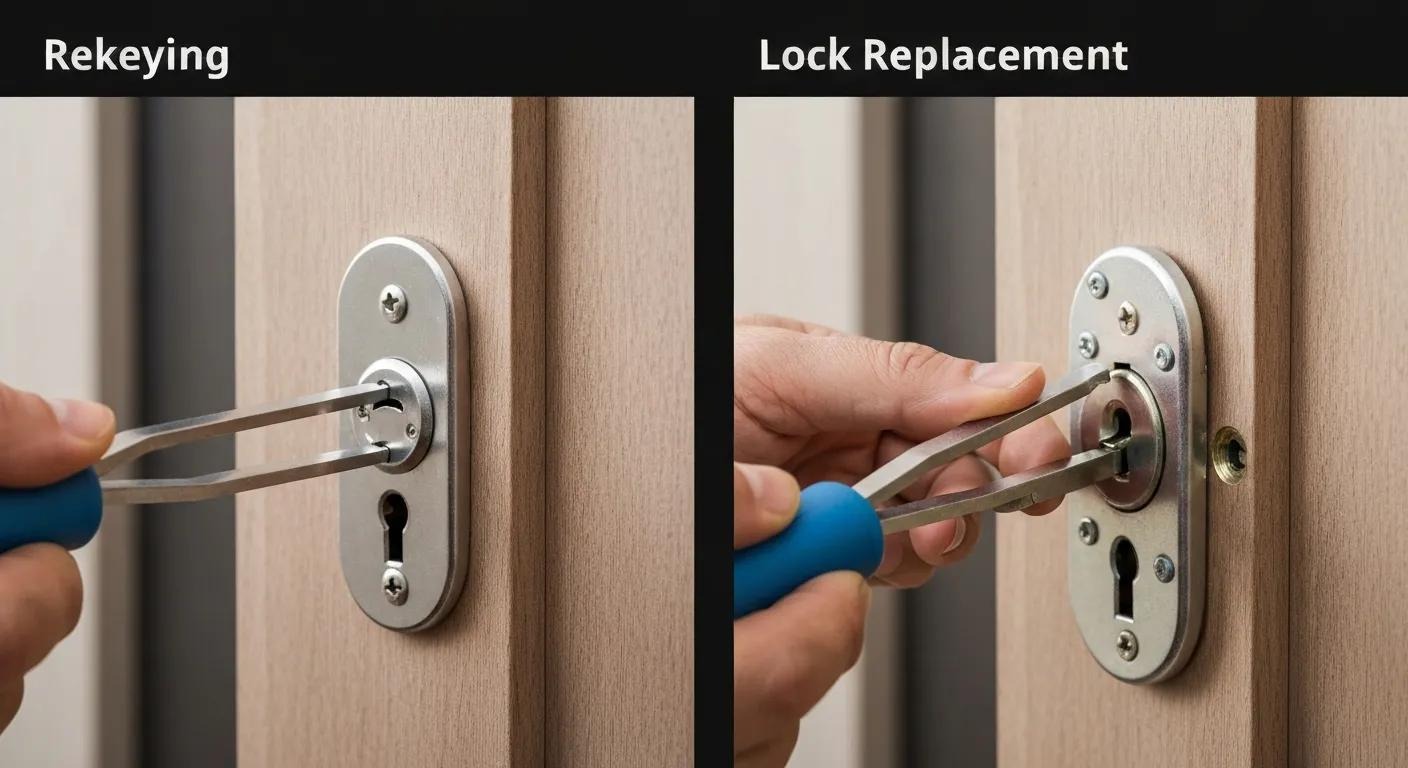
Rekeying alters the internal pins of an existing cylinder so old keys no longer work; replacement fits a new lockset or cylinder. Each option has different cost and security outcomes. Rekeying is usually faster and cheaper because it reuses the existing hardware and needs less carpentry, a sensible choice for lost keys or tenancy changes when the lock body is in good condition. Replacement upgrades security, fixes worn components and lets you choose higher-spec cylinders or multi-point systems; though more expensive upfront, replacement removes longer-term risks linked to ageing or damaged hardware. The table below summarises typical costs and security impact to help you decide.
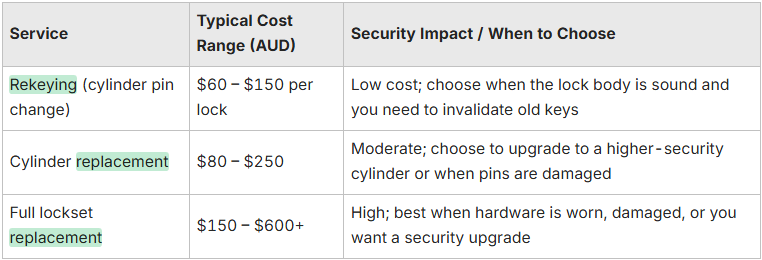
This shows that rekeying is an economical short-term fix, while replacement delivers greater durability and a higher security rating over time. With these ranges in mind, consider when rekeying will be the most cost-effective choice.
We at Lost Key Locksmiths recommend rekeying when your existing lock hardware is mechanically sound and the priority is to invalidate lost or unreturned keys. We suggest replacement when the lock shows wear, damage or when you want an immediate upgrade to a higher-security cylinder. Our local experience helps you choose the economical rekey option where appropriate or recommend replacement when long-term security is the priority.
When rekeying is the more affordable option
Rekeying is usually cheaper when the lock body is mechanically sound and your main goal is to stop access by previously issued keys, for example after a tenancy change or a lost key. It takes less time than a full replacement because the locksmith swaps internal pins rather than removing and refitting hardware, keeping labour and parts costs down. Rekeying doesn’t offer the security gains of a new high-grade cylinder, but it’s often the fastest, lowest-cost way to regain control across multiple doors. Before choosing rekeying, check cylinder condition and whether the lock uses patent-protected keys or proprietary parts that could make rekeying impractical.
Security advantages of replacing locks
Replacement lets you upgrade to anti-snap, anti-pick or multi-point systems that significantly improve resistance to forced entry. A new lockset removes degraded components, worn tumblers, corroded bolts or loose strike plates, that weaken security even if the cylinder still turns. Replacement also supports standardised keying, master-key setups or access-control integration, giving more control and auditability than rekeying alone. If your property needs modern security features or the lock body shows physical wear, replacement is a more durable, future-proof choice.
Comparing rekeying and replacement costs in Sydney
In Sydney, rekeying sits at the lower end of price bands because it uses less locksmith time and fewer parts, while full replacement adds parts and extra labour for fitting and testing. Rekeying commonly costs under $150 per lock; cylinder or lockset replacement ranges from about $80 for a basic cylinder swap up to $600 or more for complex mortise or high-security installations. When getting quotes, ask for separate line items for labour, parts and any door work so you can compare cost versus security for your situation.
DIY versus professional lock replacement pros and cons
DIY lock replacement can save immediate labour fees but carries risks and hidden costs if installation is incorrect or the wrong parts are bought. Professionals bring experience, the right tools, warranties and correct fit, reducing long-term security risks and avoiding issues like misaligned strikes, stripped threads or voided product warranties. Hiring a licensed locksmith ensures the lock meets security standards and that door or frame reinforcement is done correctly; that extra cost often pays off by preventing future damage or rework. Below are typical DIY advantages and reasons homeowners pick professional installation for lasting reliability.
- DIY can be cheaper upfront when you own the tools and it’s a simple cylinder swap.
- DIY risks include incorrect alignment, damaged door edges and potential warranty voids on branded hardware.
- Professional locksmiths provide correct installation, warranty-backed workmanship and compatible parts.
- Professionals can recommend security upgrades that save money over the life of the lock.
DIY risks and hidden costs to watch for
Common DIY mistakes, misaligned strike plates, wrong backset choice, or not checking door thickness, can cause poor lock performance, premature wear or compromised security that needs professional rework. Hidden costs include buying the wrong hardware, time spent troubleshooting, and possible cosmetic or structural repairs if holes are oversized or the mortice is damaged. Some high-quality manufacturers require professional fitting to honour warranties, so self-installation can void coverage and raise lifecycle costs. Reserve DIY for straightforward swaps where compatibility is confirmed and you’re confident in the necessary carpentry and measuring skills.
Why a professional locksmith is worth the investment
Professional locksmiths save you time, fit locks correctly, provide warranties and ensure security requirements are met, all of which reduce long-term incident and maintenance costs. Locksmiths use precision tools and have experience with mechanical cylinders, mortise systems and smart locks, so the installed hardware works reliably with your doors and frames. Professionals also supply itemised quotes and workmanship guarantees that help with future maintenance or insurance claims. Correct installation prevents repeat problems and extends the life of your lockset, so the upfront cost for a pro often offsets future repair or replacement bills.
How to get an accurate lock replacement quote in Sydney
A reliable quote needs a clear scope, a description of door material and condition, and an itemised breakdown of parts, labour, call-out fees and any expected extras such as frame reinforcement or programming. Start by sending photos or a short video of the door and lock, plus door thickness, backset and whether the door is uPVC, timber or metal, this reduces guesswork and improves estimate accuracy. Request a written estimate that lists parts, labour units and warranty terms rather than a single lump sum so you can compare offers properly. The checklist below summarises essential pre-quote info and questions to help you get a comparable estimate.
- Provide door photos, material, thickness and existing lock type.
- Ask for an itemised quote separating parts, labour and call-out fees.
- Confirm whether the quote includes warranty, disposal of old hardware and after-hours surcharges.
- Ask for expected timeline, any door modification requirements and maintenance recommendations.
After gathering comparable quotes, check whether any quoted smart lock needs hubs or network components so you can include integration costs before accepting an estimate. For clarity on written estimates, read the practical explanation below.
We at Lost Key Locksmiths provide written, itemised estimates that list parts, labour and any call-out or emergency surcharges, and we encourage clients to confirm warranty and scope before authorising work. We typically confirm door material and access conditions up front so the written quote matches on-site requirements; asking these same questions when you get a quote from us will ensure you receive a clear, comparable offer.
Questions to ask your locksmith before accepting a quote
Before accepting a quote, ask the locksmith to itemise parts, labour, call-out fees, emergency surcharges and any door modification costs so you can compare offers fairly. Confirm the brand or grade of hardware proposed and whether the price includes replacement cylinders, strike plates and screws rather than just labour. Ask about warranty coverage, what’s included and for how long, and whether the locksmith offers a workmanship guarantee or follow-up service for adjustments. Finally, check the billing method (flat minimum, hourly increments or fixed price) and how diagnostic or testing time is billed to avoid surprises.
How to spot and avoid hidden fees
Hidden fees often show up as after-hours surcharges, disposal charges for old hardware, or extra costs when door adjustments are needed; ask for line-item detail to reveal these before work starts. Confirm whether the quoted price assumes a standard door condition and whether additional carpentry or frame reinforcement will be quoted separately. Clarify if software or gateway setup for smart locks is included or billed as an add-on, and whether battery replacement or commissioning is covered. If a quote looks unusually low, ask what’s excluded, very low bids frequently omit required parts or testing that will increase your final bill.
Why a written estimate matters
A written estimate protects both you and the locksmith by documenting scope, costs and warranty terms, making disputes or adjustments easier to resolve. It helps you compare multiple quotes by listing parts, labour and any extras instead of relying on verbal assurances. Good written estimates include the lock model or grade, labour units, warranty details and circumstances that trigger extra charges, such as door modification. Review any estimate for exclusions, timelines and after-hours surcharges to avoid unexpected bills.
Smart locks benefits, costs and what to expect
Smart locks offer remote access, audit trails and integration with home automation, but they raise upfront costs and add ongoing maintenance responsibilities like battery changes and firmware updates. Their value comes from features such as remote unlocking, temporary access codes and activity logs, useful for homeowners and property managers. Cost drivers include the device price, any gateway or hub for remote access, and locksmith time to configure apps and ensure reliable Wi-Fi or Bluetooth. The table below maps common smart lock features to attributes and typical cost impact so you can decide if the upgrade fits your security and budget goals.
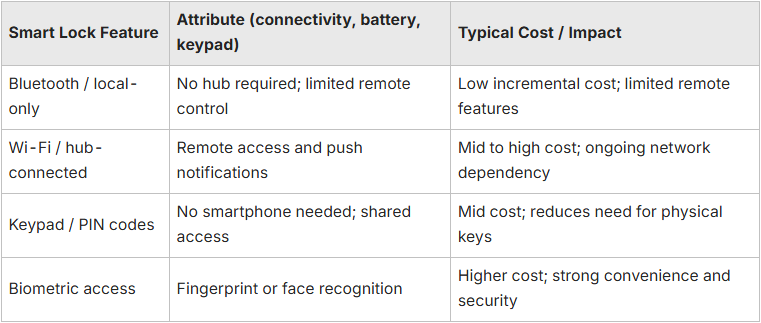
This mapping explains why smart lock installation costs in Sydney tend to be higher than mechanical replacements: the value is in connectivity and software as well as the hardware. The next section covers typical installation breakdowns and extra integration expenses to expect.
Typical smart lock installation cost in Sydney
Smart lock installation combines the unit price with an installation fee for fitting, configuration and network setup; a common Sydney total falls between $300 and $900 depending on device and integration complexity. Bluetooth locks with minimal door modification sit at the lower end; premium units with Wi-Fi bridges, multi-point integration or biometrics sit at the higher end. If a device needs a dedicated gateway or extra mounting kits to fit your door, those add to parts and labour. Always confirm whether app setup, account linking and basic user training are included in the installation price.
Features that justify the higher cost
Smart locks justify higher prices through features that improve access control, monitoring and convenience: remote locking/unlocking, time-limited guest codes, audit trails showing who entered and when, and integration with alarm or home automation systems. Remote access is helpful for short-term rentals, tradespeople access or managing multiple properties. Audit trails suit commercial or strata settings, while keypads and biometrics reduce key-copy risks. When these benefits match your needs, shared access, frequent remote management or monitoring, paying more up front can produce real operational savings and stronger security.
Ongoing costs for smart locks
Smart locks bring ongoing costs such as battery replacement every 6 to 18 months depending on use, possible subscription fees for cloud services, and occasional firmware updates or repairs that require technical support. Vendor lock-in can complicate future replacement if a manufacturer stops support or changes protocols, so choose devices that use open standards or established ecosystems to reduce long-term risk. When budgeting, include periodic batteries and maintenance, confirm warranty terms for electronic failures, and ask whether local locksmiths provide firmware or troubleshooting support. Proper device selection and clear vendor terms lower lifecycle costs and improve long-term reliability.
If you prefer local help with smart lock selection and installation, we offer consultations and itemised installation estimates that include device setup and on-site testing. We match device features to door types and network environments so installation costs align with expected performance.
We provide local quotes and booking options for Sydney customers who want written estimates or on-site inspections. If you’d like a personalised cost comparison and a clear, itemised quote, request a local estimate through our online booking and contact channels.
Read More

12 Different Types of Locks and How to Choose the Best
Looking for the right lock? With 12 different types to choose from, it's not just about keeping the bad guys out—it's about matching security to your actual needs. Your front door deserves that solid deadbolt, while bedroom doors just need a simple privacy lock to prevent awkward walk-ins.

NSW Locks and Security in Rental Property
NSW locks and security in rental property: Learn about a tenant changing locks without permission, returning keys at end of lease, and responsibilities.

What to know about cam locks
Ever used a filing cabinet or vending machine? You've encountered cam locks! These simple devices use a rotating flat metal piece (the cam) that swings into place when you turn the key, securing everything from office furniture to industrial equipment.


