


How Fast Will Lost Key Locksmith Reach You?
Lockouts are sudden and stressful, and the first thing most people want to know is how soon help can arrive. This guide lays out realistic emergency locksmith arrival times, the main factors that change those times, and practical steps you can take while you wait. From Lost Key Locksmith’s point of view, you’ll find standard ETA ranges for urban, suburban, and rural calls, how emergency response differs from scheduled work, and which details speed up dispatch. We define typical arrival windows, explain how traffic, weather, and lock complexity shift ETAs, and give scenario based expectations for residential, automotive, and commercial lockouts. You’ll also get simple safety checklists and a list of the precise details that help us reduce delays, plus a behind the scenes look at how a rapid response provider organizes dispatch and technician placement. By the end you’ll know reasonable wait times, how providers prioritise calls, and what you can do to shorten the rescue time when you’re locked out.
What Is the Average Locksmith Arrival Time for Emergency Services?
Emergency locksmith arrival times depend on where you are. In dense urban areas, we prioritize rapid response, often aligning with typical industry ranges of 15 to 30 minutes. Suburban calls usually see technicians arrive within a 20 to 45 minute range, and rural responses can stretch to 45 to 90 minutes because technicians are farther apart. Those windows reflect travel time, how dispatch prioritises calls, and routing with traffic aware navigation. They're realistic expectations based on typical conditions, not guaranteed promises. Emergency calls take priority over scheduled jobs, so dispatchers normally send the closest available technician first, which shortens arrival compared with non emergency appointments. After hours, rush hour, or major weather events can push these windows longer, and customers should expect extra delays when roads are congested or unsafe. Knowing these ranges helps you set realistic expectations and gives you an idea of what details (exact location, access notes) will help speed dispatch.
For quick reference, typical emergency arrival windows by area:
- Urban: Typically 15 to 30 minutes.
- Suburban: Typically 20 to 45 minutes.
- Rural: Typically 45 to 90 minutes.
These ranges let you compare providers and understand why proximity and dispatch practices matter; the next section explains how Lost Key Locksmith typically handles responses in context, always aiming for the quickest possible arrival.
How Quickly Does Lost Key Locksmith Typically Respond to Lockouts?
Lost Key Locksmith uses the industry ranges above as a practical guideline, focusing on fast prioritisation and clear communication rather than promising an exact minute. In urban and inner suburban areas we aim to route the nearest available technician quickly, often aligning with typical urban windows, while rural calls naturally take longer and often fall into the 45 to 90 minute band. For example: a customer locked out of a ground floor apartment in a busy neighbourhood gave their exact location, dispatch sent the closest technician with GPS navigation, and the technician arrived within the expected urban window. Our approach is about reducing delay by collecting clear location details and using real time routing, and we’re upfront that severe weather or a surge in incidents will stretch arrival times. Clear information from you about access and exact position directly shortens time to arrival.
What Are the Differences Between Emergency and Non Emergency Response Times?
Emergency calls get priority dispatching and faster routing; non emergency or scheduled work follows planned appointment windows that are usually several hours long. Emergency response means immediate triage, assigning the closest qualified technician, and pausing scheduled work when needed; non emergency visits are fitted into daily schedules and can be booked days ahead. Pricing, staffing, and after hours coverage also differ: emergency work often requires 24/7 readiness and may include after hours fees, while scheduled services typically occur during normal business hours at standard rates. The practical difference for you is wait time: emergency calls prioritize rapid response, aiming to arrive as quickly as possible, while non urgent jobs give a later appointment with a broader window. Knowing this helps you pick the right service and set realistic expectations for arrival and cost.
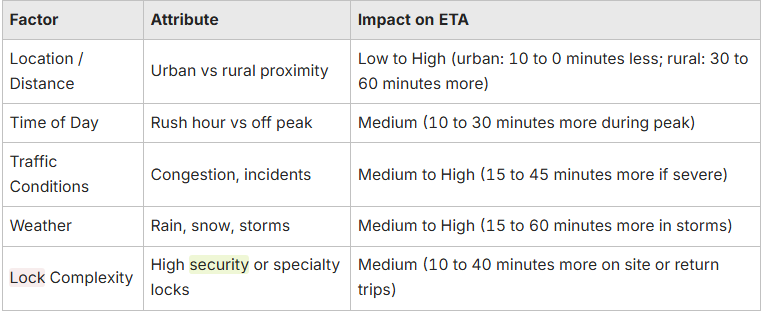
Which Factors Influence Locksmith Emergency Response Time?
A few predictable factors determine response time: location and distance; time of day and traffic; weather and road conditions; and lock or vehicle complexity. Each can add or subtract minutes from a baseline ETA. Location affects technician density and travel distance, so urban calls usually get faster responses while rural calls add travel time. Traffic and time of day cause variable delays that routing software can reduce but not eliminate, and weather can slow travel or make routes unsafe. Lock complexity and special equipment needs affect how long we work on site and sometimes require return trips if parts are needed, which increases total resolution time beyond arrival. Understanding how distance, traffic, and lock complexity interact helps both customers and dispatchers set accurate ETAs and deploy resources wisely.
This table summarises key factors and the typical impact each has on arrival time:
How Do Location and Distance Affect Locksmith Arrival Time?
Geographic proximity dictates which technician can respond and how long travel takes: closer technicians mean quicker arrival, while sparse coverage can add minutes or even an hour plus. Service area density often follows a hub and spoke model. Companies with multiple staging hubs shorten average travel distance; single team coverage increases wait time variability. As a rule of thumb, a dispatch radius under 10 miles in urban settings often produces rapid responses, whereas the same radius in rural terrain can be misleading because of slower roads and larger gaps between hubs. GPS routing and traffic aware navigation help pick faster routes but can’t replace technician density. Clear location info and accessible pickup points reduce travel interruptions and speed arrival; the next section explains how time of day, traffic, and weather build on these geographic effects.
What Impact Do Time of Day, Traffic, and Weather Conditions Have on Response Speed?
Rush hour and big events create predictable congestion that usually adds 10 to 30 minutes to travel time, while accidents or road closures can cause larger, area wide delays. Late night calls often have less traffic but might be affected by limited on call staff, which can add time if technicians must come from farther away. Weather, heavy rain, snow, ice, or storms can tack on 15 to 60 minutes or more depending on severity because of slower driving, safety protocols, and possible road closures; in extreme conditions providers may triage calls and prioritise immediate safety situations. Companies use traffic aware dispatching to limit these impacts and often share adjusted ETAs proactively; customers should expect longer waits during peak times or severe weather and keep safety their top priority while waiting.
How Does Lost Key Locksmith Ensure the Fastest Locksmith Service Possible?
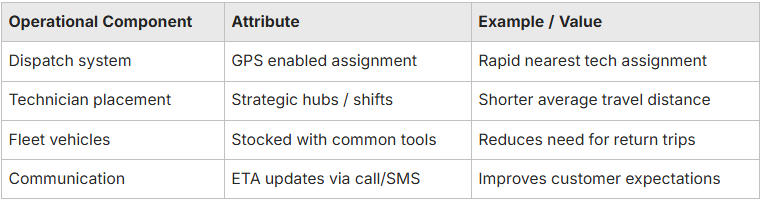
We shorten ETAs with a coordinated approach: a responsive dispatch process, GPS enabled vehicles, strategic technician placement, and clear customer communication. Dispatch triages calls and assigns the nearest qualified technician, routing and GPS optimise travel paths, and strategically located technicians or staging hubs shrink average distance to common service areas. Stocking common parts and training technicians to diagnose quickly reduces return trips and on site delays, and transparent communication keeps customers up to date when conditions change. These operational pieces: dispatch, placement, equipment, and communication work together to create faster, more predictable arrival windows.
Below is an EAV style table outlining operational components and their roles in reducing ETA.
What Strategies Does Lost Key Locksmith Use for Rapid Dispatch and Technician Placement?
Rapid dispatch depends on live location data, staggered shifts to cover peak times, and placing technicians near high demand neighbourhoods or major routes. Dispatchers assess incoming calls, match the required skills to available technicians, and use routing algorithms to pick the fastest responder. In short, dispatch assigns the nearest qualified technician. Staging hubs and pre positioned shifts cut travel time by keeping resources close to common service clusters, and cross training helps more calls get resolved on the first visit, minimising total resolution time. These logistics focus on efficiency rather than promising fixed minutes, and they work best when customers provide accurate location and access details on the initial call.
How Does Lost Key Locksmith Communicate Estimated Arrival Times to Customers?
We aim for clear, useful communication: an initial ETA when dispatch confirms a technician, updates if travel conditions change, and a final notice when the technician is minutes away. We provide an estimate, then updates, and finally an on scene notice. We use phone calls and text updates, and when available we offer live ETA tracking so you can see the technician’s progress. Messaging also includes basic safety tips and instructions for confirming the technician’s identity so you know what to expect at arrival. Clear communication reduces uncertainty, helps you prepare for access, and often speeds hand off so the job can begin right away.
What Are Typical Arrival Times for Specific Lockout Scenarios?
ETAs vary by scenario because access challenges, required tools, and verification steps affect both arrival and on site time. Residential, automotive, and commercial lockouts each follow different timelines. While we prioritize rapid response for all emergencies, the typical arrival times listed below are observations based on common scenarios and should not be considered guaranteed promises. Residential calls in single family homes usually align with urban/suburban ranges if a nearby technician is available, but multi unit buildings, gated entries, or concierge procedures add time. Car lockouts depend on vehicle location and parking constraints; technicians can arrive quickly in populated areas but may need special tools for newer electronic locks, lengthening on site work. Commercial lockouts often require authorisation and security checks before work can begin. The table below maps common scenarios to typical ETA ranges and notes.
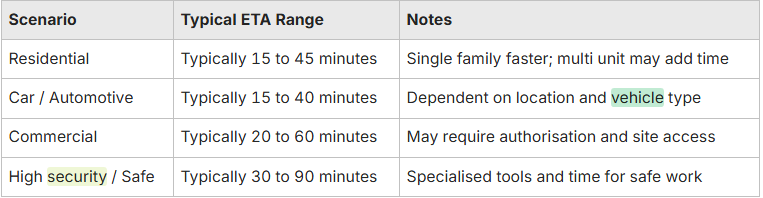
This mapping highlights where extra minutes usually come from and what you can do to help speed service; the sections below offer scenario specific tips and prep steps.
How Fast Can Lost Key Locksmith Arrive for Residential Lockouts?
For straightforward residential lockouts near our technicians, we prioritize rapid response, aiming to arrive as quickly as possible, often aligning with typical industry ranges. We acknowledge that gated communities or building access rules can add time. On site unlock duration depends on the lock: simple cylinder locks can be opened in minutes, while high security or multi point systems require more careful work. You can speed arrival and on site resolution by giving your exact address and unit number, clear parking directions, and any gate or access codes when you call. If your property has building management or a concierge, tell dispatch so we can coordinate authorisation and speed the hand off on arrival.
What Is the Expected Response Time for Car Lockouts and Commercial Lockouts?
For car lockouts in populated areas, we prioritize rapid response, aiming for the quickest possible arrival, with on site work varying from quick entry techniques to longer diagnostics for electronic or smart locks that need vehicle specific tools. Location factors, such as secure lots, private property, or towing restrictions, can add time for access or approvals. Commercial lockouts often require ID checks or manager approval, which increases total time; for these, we aim for rapid response, with arrival times often aligning with typical industry ranges. Having proof of ownership or authorisation ready and clear contact details for on site decision makers helps speed both arrival and the start of work.
What Should Customers Do While Waiting for a Locksmith to Arrive?
While you wait, put safety first, gather information to speed dispatch, and avoid risky DIY attempts that could damage locks and increase resolution time. Helpful steps include moving to a safe spot if you’re stranded, keeping your phone charged for updates, and preparing proof of ownership or ID if it might be required. Don’t try to force locks or windows. That often leads to costly repairs. Instead, follow any dispatcher instructions and stand by in a visible, safe location to meet the technician.
- Move to a safe, well lit location: Your safety comes first.
- Keep phone accessible and charged: So you can get ETA updates and share directions.
- Prepare proof of ownership or authorisation: Speeds verification and reduces delays.
- Avoid forced entry attempts: Prevents damage that raises repair time and cost.
How Can Customers Ensure Their Safety During the Waiting Period?
Choose a secure, visible spot to wait and avoid confrontations or risky attempts to re enter. If you’re alone in an unsecured area, move to a nearby public space or a neighbour’s home and tell dispatch your new location. Keep your phone on and share ETA or tracking details with someone you trust so another person knows your status. If you believe there’s immediate danger or suspicious activity, call emergency services before waiting for locksmith help. Stay aware of your surroundings and verify the technician’s identity when they arrive by checking credentials and confirming details from dispatch. These precautions protect your safety and make the hand off smoother.
What Information Should Customers Prepare to Provide to the Locksmith?
Clear, accurate information speeds dispatch: give the exact street address and unit number, concise access notes (gate codes, best parking spots), a brief description of the lock or your vehicle’s make and model, and proof of ownership or authorisation if available. Mention complicating factors, such as narrow alleys, restricted entry hours, or elevator codes, so the dispatcher can assign the right technician and avoid hold ups. For vehicles, knowing the year, make, and model speeds tool selection and diagnosis; for commercial sites, have the manager’s contact ready. In short: you provide clear details, dispatch assigns the right tech, and the technician arrives prepared, which shortens both arrival and repair time.
How Can Customers Find a Reliable Locksmith Near Me with Fast Arrival Times?
To find a fast response locksmith, check local availability, transparent dispatch practices, recent customer feedback about punctuality, and whether the provider offers clear ETA communication or tracking. Look for companies that advertise 24/7 emergency coverage and real time dispatching, read recent reviews that mention prompt arrival, and ask how their dispatch and technician placement work. Reliable providers will explain their process instead of guaranteeing an exact minute.
- Service hours and dispatch transparency: Confirm 24/7 coverage and how ETAs are shared.
- Local presence or staged technicians: Shows true proximity, not long distance subcontracting.
- Recent customer feedback on punctuality: Reviews that consistently note arrival times indicate reliability.
What Makes Lost Key Locksmith a Trusted Choice for Emergency Lockout Assistance?
Lost Key Locksmith focuses on clear communication, well trained technicians, and true round the clock availability. All trust signals that show we’re set up to respond quickly when emergencies happen. Transparent dispatch practices and ETA updates reduce uncertainty and help you prepare, while trained technicians with stocked vans cut down on site delays and the chance of return trips. We highlight these operational practices so customers can evaluate providers on process rather than on unverified claims; choosing a locksmith that explains dispatch methods and technician placement gives you a practical expectation of faster arrival when it matters most.
How Does 24/7 Availability Affect Locksmith Response Time and Customer Peace of Mind?
24/7 availability shortens typical wait times during evenings, weekends, and holidays by keeping on call technicians ready for common emergency windows. Maintaining continuous coverage requires staggered shifts and on call logistics that raise staffing costs, but the benefit is faster access to help and greater peace of mind when you face a lockout outside normal hours. After hours calls may include industry standard premiums in some markets to cover rapid response staffing, but the operational advantage is clear: consistent availability reduces the longest delays and reassures customers that help is reachable at any time. Knowing a provider maintains true 24/7 readiness helps you choose a service that matches your emergency needs.
Read More
12 Different types of Door lock
Choosing the right lock for your home shouldn't feel overwhelming. Are you wondering whether a smart lock is worth the investment, or if that basic deadbolt really provides enough security? This guide breaks down 12 different types of door locks in plain English, explaining how each works, where they're best used, and what kind of protection they actually provide.
Lock replacement cost comparison what Sydney homeowners and businesses should expect
Lock replacement in Sydney can mean anything from a simple doorknob swap through to a high security deadbolt or smart lock upgrade and the price varies depending on the hardware and labour involved. This guide explains typical cost ranges for common lock types, how call out fees and emergency work change the quote, and when rekeying is a more affordable alternative to full replacement.

What to know about barrel bolt locks
Barrel bolt locks are simple security devices that slide a metal rod into a bracket to keep doors secure. Discover different types, installation tips, and maintenance requirements.


