


Commercial Locksmith Services Sydney
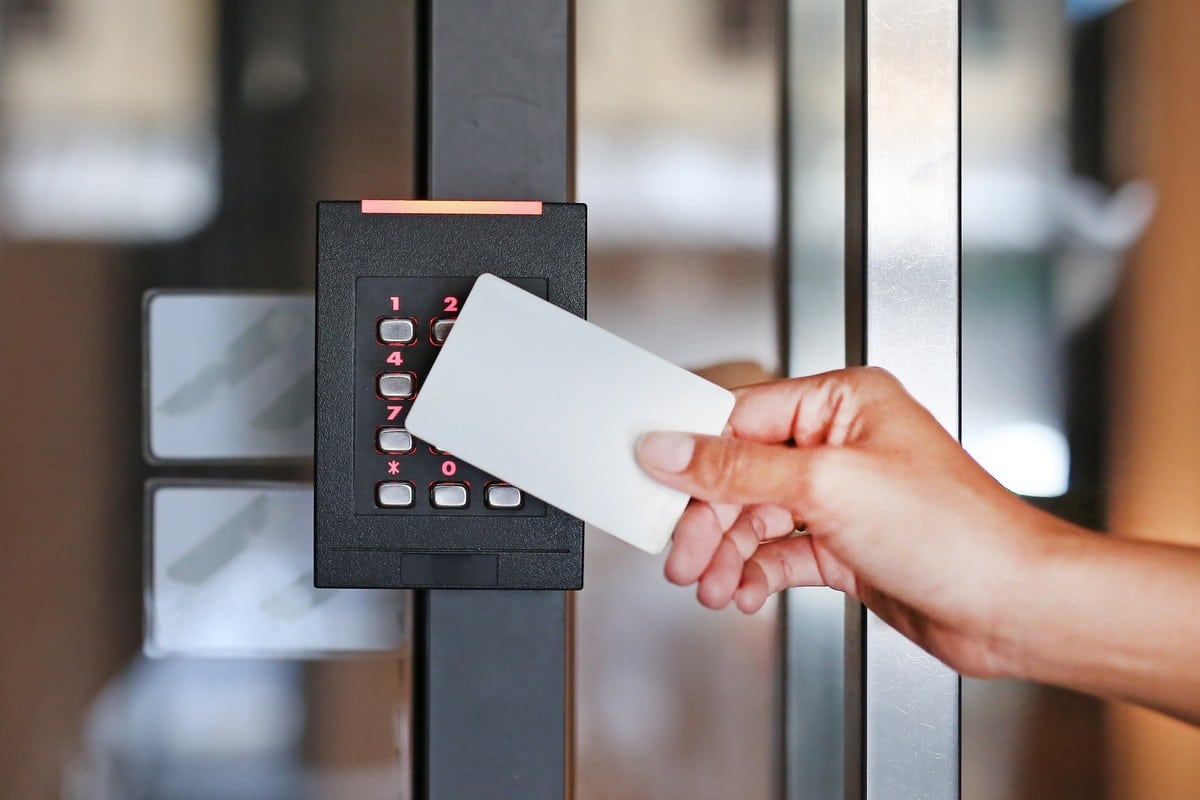
Commercial locksmith services in Sydney give businesses the support they need to protect their workplace, equipment, and staff. These services cover everything from physical lock repairs to modern access systems that help control who enters each area of a building. This guide walks you through what these services include, why they matter, and how solutions like master key setups, high security locks, and electronic access control can strengthen the safety of your business.
Many workplaces deal with everyday problems such as staff getting locked out, broken locks after an attempted break in, or the challenge of managing too many keys. A reliable commercial locksmith can handle urgent issues and also help set up a long term access system that keeps your business running smoothly. Here, you will learn about the common services available in Sydney, how emergency callouts usually work, when a master key system is useful, and what to look for when choosing a locksmith. The information is explained in simple terms so you can make the right decisions without needing technical knowledge.
What Are Commercial Locksmith Services in Sydney?
Commercial locksmith services focus on installing, repairing, and maintaining the tools that control access to your business. This includes traditional lock hardware such as cylinders, keys, and door mechanisms, as well as electronic systems like key card readers and control panels.
When these parts work well together, they help prevent unauthorised access and make sure that staff can enter the right areas without delay. This reduces disruption, improves safety, and helps businesses meet insurance or security requirements. The next section outlines the common locksmith services you can expect and explains how they support everyday business needs.
Which Services Do Sydney Commercial Locksmiths Provide?
Commercial locksmiths offer a wide range of services to suit different workplace needs. These may include rekeying, restricted key systems, master key planning, installing high security locks, electronic access control setup, panic bar repairs, safe installation, and emergency lockout assistance.
Each service supports a real workplace situation. For example:
- Rekeying helps control access when staff leave the business
- Servicing panic bars keeps exit doors safe and compliant
- Electronic access systems let managers set staff permissions and view access records
Knowing which service matches your situation helps you avoid unnecessary upgrades and invest in the solutions that genuinely improve security.
How Do Commercial Locksmith Services Enhance Business Security?
Commercial locksmith services strengthen security by fixing weak points and improving control over who enters your building. Upgrading old locks or installing high security hardware makes it harder for intruders to force entry. Proper key management prevents unauthorised key copies. Electronic access control allows you to set time based entry rules and track who has visited certain areas.
By combining strong physical locks with smart electronic systems, you gain better protection, clearer records of entry, and faster recovery after a security issue. This is important for both safety and compliance, and it leads into the next topic which looks at how emergency services help when something goes wrong unexpectedly.
How Can Emergency Commercial Locksmith Services Help Sydney Businesses?
Emergency commercial locksmith services offer fast support when something urgent happens, such as a lockout, break in, or damaged door hardware. These locksmiths can arrive quickly and carry out on site repairs to restore access and secure the workplace.
They may replace cylinders, repair damaged locks, secure broken doors, or provide temporary boarding if needed. The main goal is to restore safety and get your business operating again as soon as possible.
What Are Common Emergency Locksmith Situations for Sydney Offices?
Sydney offices often deal with issues such as lost or stolen keys, jammed exit doors, after hours lockouts, or damage caused by break ins. In any urgent situation, the first priority is staff safety. The next step is to record the scene for police or insurance before any repairs are carried out.
For example, after a break in, staff should avoid touching damaged areas so evidence is preserved. Once police have attended, a locksmith can secure the doors and replace any compromised locks. This approach protects your team, supports insurance claims, and helps return the workplace to normal as quickly as possible.
How Quickly Can Emergency Locksmiths Respond in Sydney?
Most emergency locksmiths in metro Sydney can arrive within about fifteen to thirty minutes. The exact time depends on traffic, availability, and how urgent the situation is. A provider with local locksmiths and fully stocked service vehicles can usually respond faster.
When choosing a locksmith, it is helpful to ask about their average response times, how they handle after hours calls, and whether they carry the most common replacement parts. This helps you plan ahead and understand what to expect if an emergency happens.
Preparing for different response times also helps businesses create backup plans such as temporary access routes or short term boarding while waiting for a locksmith.
What Are Master Key Systems and How Do They Benefit Sydney Businesses?
A master key system is a structured way of organising locks and keys so that different people have different levels of access. Individual staff members can have keys that open only the doors they need, while a supervisor or manager can use one key to open several areas. This is achieved by setting up the lock cylinders in groups and assigning keys based on access requirements.
For businesses, a master key system reduces the number of keys people need to carry, makes access easier to manage, and helps maintain clear control over who can enter each space. It is especially useful for multi level buildings, strata complexes, offices with many departments, and workplaces that have both staff and contractors coming and going.
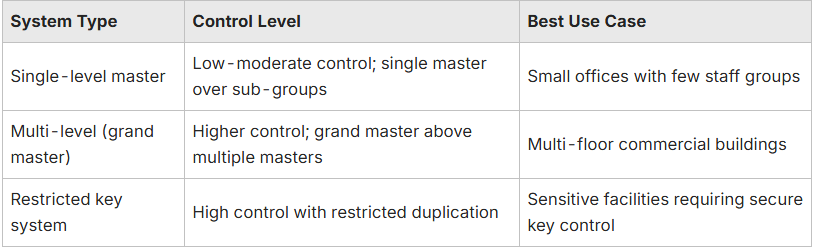
Below is a simple comparison of common master key system types to help business owners choose the most suitable option for their needs.
Master key system options and how they differ:
How Does a Master Key System Work for Commercial Properties?
A master key system works by setting up locks so they can be opened by different levels of keys. Individual keys open only the doors assigned to them, while a higher level key can open several doors across the building. Locksmiths achieve this by arranging the internal pins and keying codes of each lock so that certain keys share the same access pattern.
Setting up the system usually begins with a site inspection to understand who needs access to which areas. The locksmith then selects the right cylinders, creates a key plan, and securely stores the codes to prevent unauthorised copies. Good record keeping is essential. Businesses should track who holds each key, set rules for duplication, and plan for rekeying if a key is lost or when staff leave. Using restricted key blanks and proper documentation keeps the system organised, reduces long term costs, and makes future updates simple.
Careful planning is important because it protects the security of the system and supports smooth expansion as the business grows. This leads to the next point which explains the main benefits for commercial properties.
What Are the Key Advantages of Installing Master Key Systems in Sydney?
Master key systems offer convenience, stronger security control, and easier day to day management. They reduce the number of keys in circulation, which means fewer opportunities for keys to be misplaced or copied without permission. Access becomes more efficient because staff carry only the key or keys they actually need.
For facility managers, the system lowers administrative work and reduces downtime when contractors require temporary access. A sub master key can be issued and later cancelled without needing to change every lock. In strata buildings, multi tenant offices, or shared commercial spaces, the system creates clear separation between tenant access and service access. Emergency services or authorised personnel can still enter common areas when required.
Overall, the advantages include lower long term costs, fewer rekeys, easier access control, and greater accountability. These benefits also help prepare business owners for the next important step which is choosing the right professional to design and maintain the system.
How Do You Choose the Right Commercial Locksmith in Sydney?
Choosing a commercial locksmith means looking for skill, transparency, and proven experience. A reliable provider should have visible trade accreditation, strong experience in commercial projects, appropriate insurance, and the ability to offer clear written guarantees. Itemised quotes are important because they show exactly what you are paying for, including labour, parts, call out fees, and any electronic system costs.
It is also wise to choose a locksmith who demonstrates secure key control processes, uses proper documentation for master key planning, and can integrate both mechanical and electronic access systems. This helps prevent short term fixes that fail to support future growth.
Below is a simple checklist to help compare providers:
- Confirm trade accreditation, insurance, and commercial references
- Check experience in your sector, such as retail, strata, or healthcare
- Request detailed written quotations that separate labour, parts, and call out costs
- Ask about emergency response times and after hours support
Using this checklist makes it easier to compare locksmiths fairly. The next section explains which credentials and experience levels business owners should look for.
What Licensing and Experience Should Sydney Businesses Look For?
Businesses should look for locksmiths who can show strong experience working with commercial properties. Ask for references from similar projects and confirm that the provider holds suitable trade licences and insurance. Membership in recognised industry bodies is also a good sign of professionalism.
It helps to review examples of completed work. Ask for real case studies that show the problem, the solution, and the outcome. This might include improved audit tracking, reduced key duplication, or better access control for staff and contractors. These checks ensure the locksmith can handle more complex builds and support your system as it grows.
Confirming these requirements protects your business before you move on to comparing pricing and service transparency.
How to Evaluate Commercial Locksmith Pricing and Service Transparency?
Clear pricing is essential when choosing a commercial locksmith. A professional provider should break down all fees, including call out charges, labour, hardware, and any software or ongoing costs for electronic access systems. Avoid providers who give vague estimates or refuse to itemise their quotes.
Ask for a written scope of works, warranty terms, and a full explanation of what is included. It also helps to request examples of long term cost comparisons between mechanical and electronic solutions. This allows you to weigh immediate installation costs against future savings such as reduced rekeying or easier access administration.
A clear and honest pricing structure supports confident budgeting and leads naturally into the next topic which covers the types of locks and repairs available for commercial buildings.
What Types of Commercial Lock Installation and Repair Are Available in Sydney?
Commercial locksmiths in Sydney work with a wide range of mechanical and electronic locking systems to suit different business requirements. Common installations include high security mortice locks, deadbolts, electronic strikes, panic bars, and access control readers. Repair and maintenance services often involve rekeying, cylinder replacement, reinforcing strike plates, and servicing panic bars to keep exit doors compliant.
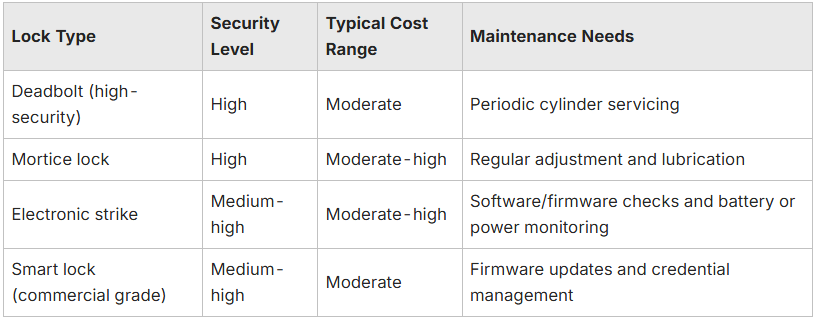
Choosing the right hardware depends on the type of business, the level of security required, and the design of the door or entry point. A retail shopfront, warehouse, and office suite will each require different solutions. The table below gives an introductory comparison of common lock types, including their security level, cost, and maintenance needs, to help businesses prioritise the best options for their property.
Introductory comparison of commercial lock types:
Which High-Security Locks Are Best for Sydney Commercial Properties?
High security locks are essential for businesses that need stronger protection against forced entry or tighter control over who can copy keys. Many Sydney commercial properties use accredited high security cylinders and mortice locks because they offer stronger resistance to drilling, picking, and tampering.
Retail shops and hospitality venues often choose reinforced deadbolts and anti drill cylinders to reduce smash and grab attempts. Warehouses usually benefit from heavy duty mortice locks and multi point locking systems that can secure large roller doors or wide entry points. For areas that require strict monitoring, such as server rooms or record storage, electronic strikes paired with access control readers are a smart choice because they provide clear audit records and timed access.
The best lock for your property depends on the type of door, how much wear it receives, and whether your priority is strong mechanical protection or the added visibility that electronic audit trails provide.
Choosing the correct hardware for each area of the building reduces repairs, increases durability, and offers better protection against common break in methods. This leads into the next important topic which is how to keep these systems well maintained.
How Are Commercial Door Hardware and Lock Systems Maintained?
Commercial locks and door hardware last longer and perform better when they are maintained regularly. A good maintenance routine usually includes quarterly inspections, lubrication of moving parts, checking that strike plates line up correctly, and confirming that electronic systems have up to date firmware.
You may need a locksmith to check your system if you notice signs such as sticking locks, misaligned doors, panic bars that do not operate smoothly, or repeated errors from access control readers. Keeping a maintenance checklist helps track inspection dates, repairs, and parts that have been replaced. This documentation can also support insurance claims and show that the business has taken reasonable steps to maintain security.
Regular maintenance reduces emergency repairs, protects the integrity of access control records, and helps ensure the system remains reliable during investigations or audits. These points naturally lead into how advanced access control systems can further improve business security.
How Do Advanced Business Access Control Systems Improve Security in Sydney?
Advanced access control systems such as keycard entry, mobile credentials, and biometric readers help businesses manage access more efficiently and securely. These systems allow managers to control who can enter certain areas, set time based permissions, and view detailed audit logs that show when an entry point was used.
These systems can support a single door or scale up to large commercial sites. They often integrate with alarms, CCTV, and visitor management platforms. This makes it easier to issue temporary access for contractors, revoke lost credentials instantly, and align building access with operating hours or emergency procedures.
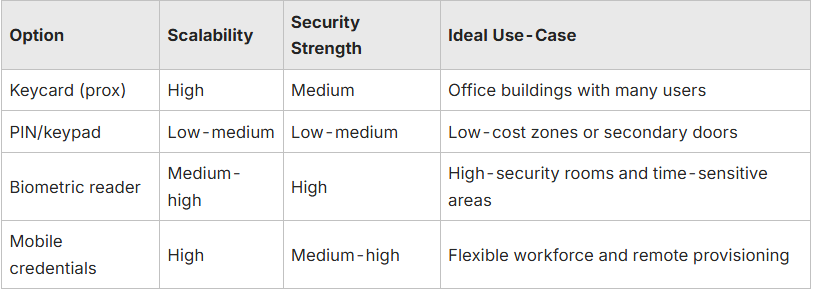
Integration also allows businesses to manage physical access in the same way they manage digital security. The table below provides a simple comparison of common access control options and the settings where they are usually used.
Introductory table comparing access control options:
What Are Keyless Entry and Biometric Access Control Options for Sydney Businesses?
Keyless entry systems give businesses an easy and secure way to manage access without relying on traditional keys. Common options include RFID keycards, PIN keypads, mobile phone credentials, and biometric readers that scan fingerprints or faces. Each option offers a different level of convenience and security.
RFID keycards are simple to use and can be scaled across large teams. Mobile credentials reduce the need to hand out physical cards and allow managers to issue or cancel access remotely. Biometric readers offer a higher level of identity assurance because the user must be physically present, although they do require careful handling of privacy rules and secure data storage. It is also important to have a backup entry method for staff who cannot use biometric scanners.
Choosing the right keyless option depends on the size of your workforce, your privacy policies, and how well the system can integrate with your existing security setup. Systems that support clear processes for enrolment, revocation, and auditing make day to day administration easier and prepare your business for future integration with CCTV and alarms.
How Can Access Control Systems Integrate with Existing Security Measures?
Access control systems can work together with other security tools to create a more complete and responsive safety network. Integrations often connect door events to CCTV cameras, alarms, and visitor management systems. When someone enters a restricted area, the system can automatically match that activity with video footage or trigger an alert if needed.
To plan a proper integration, businesses should review the systems they already have, check compatibility, and decide whether credentials will be managed on site or through a cloud platform. The process usually involves mapping out where the systems should connect, selecting the right software or middleware, and testing the combined workflow.
Well planned integrations create a unified security environment where physical entry events and digital alerts support each other. This improves incident investigations and strengthens overall response procedures. This naturally leads into how businesses can secure stored assets through commercial safe services.
What Commercial Safe Services Are Offered to Sydney Businesses?
Commercial safe services help businesses protect cash, important documents, and other valuable or regulated items. Locksmiths and safe specialists assist with choosing the right safe based on the level of security needed, the fire rating, and where the safe will be installed. They also handle delivery, site preparation, and secure anchoring to floors or walls so the safe cannot be removed.
Safe services also include repairs and professional opening for situations where a combination has been lost or the mechanism is damaged. Many providers use non destructive methods first to avoid unnecessary damage, especially for fire rated or data safes.
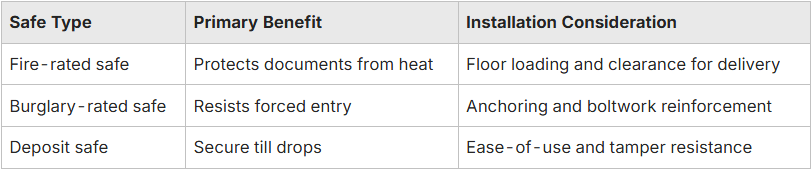
The table below gives a simple overview of common safe types and the factors businesses should consider when selecting one.
Introductory safe comparison:
How Is Safe Installation Handled for Commercial Properties in Sydney?
Safe installation for commercial properties involves careful planning to make sure the safe is delivered, positioned, and anchored correctly. Installers begin by checking the building layout, measuring doorways and hallways, and confirming that the floor can support the safe’s weight. For heavier safes, they may need to arrange lift or crane access to move the unit safely.
Anchoring is one of the most important parts of the process. Installers choose the right fixing method based on the floor material and insurance requirements. Proper anchoring prevents theft attempts and keeps the safe stable so it cannot tip over. Businesses also coordinate delivery times with installers and confirm what equipment will be needed on site to avoid delays and disruption to daily operations.
Getting the installation right protects the safe’s security rating, prevents voided insurance, and reduces future maintenance issues. Good planning also avoids unexpected costs and helps staff understand how to use and care for the safe properly.
What Are Common Safe Repair and Opening Services Available?
Safe repair and opening services cover everything from recovering lost combinations to repairing damaged locking parts. Locksmiths always start with non destructive methods such as manipulating the locking mechanism or using electronic tools to decode the entry system. If these methods fail and the lock is confirmed to be beyond repair, they move to controlled destructive entry to avoid damaging the safe more than necessary.
Repair services can include fixing hinges, boltwork, and internal components, replacing worn keypads, or restoring fire seals after a forced entry. Choosing an experienced specialist is important because it reduces the chance of unnecessary damage and helps maintain the safe’s fire and security ratings.
Knowing which approach suits the situation helps businesses protect their assets, manage costs, and reduce downtime when access issues occur.
Read More

Tips for Securing Multi-Unit Residential Buildings
Security in multi-unit residential buildings is a paramount concern for property managers, HOA board members, and residents alike. With the rise of theft, vandalism, and trespassing, implementing robust security measures is crucial to ensure the safety and well-being of everyone in the building.

What to know about Door security and how to improve it
Your front door might look secure, but if a burglar can get through it in just seconds, you've got a problem bigger than you realize. Most of us never think about door security until something goes wrong, but here's a wake-up call: about 60% of break-ins in Australia happen through doors, and burglars usually give up after just two minutes if your security makes their job too difficult. The difference between being a victim and being passed over often comes down to having the right combination of locks, reinforcement, and deterrents working together.

What to know about hand lever locks
Hand lever locks use horizontal handles you push down to open, making them much easier than door knobs for people with arthritis or when carrying items. They meet accessibility codes.


